


Beginning Friday, July 3, through Friday, July 24, the Aquarium of the Pacific will be open with outdoor exhibits only in accordance with state health orders. Indoor areas will be temporarily closed.
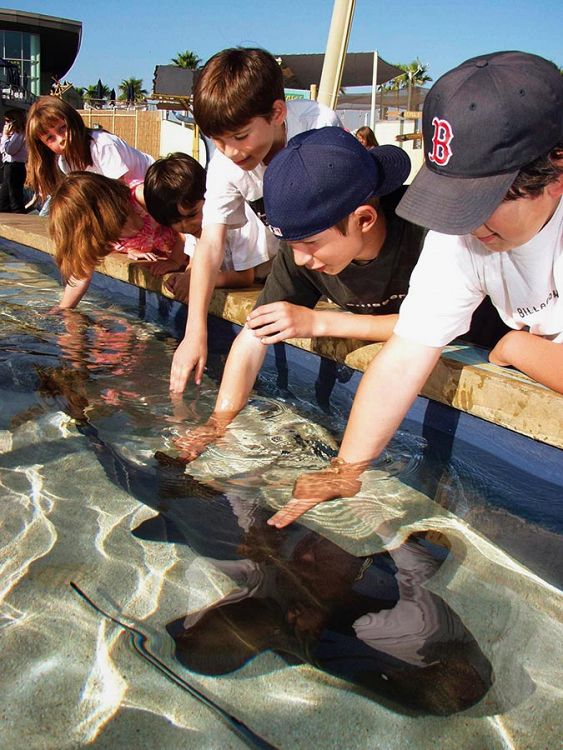
Beginning Friday, July 3, through Friday, July 24, the Aquarium of the Pacific will be open with outdoor exhibits only in accordance with state health orders. Those exhibits include the Harbor Terrace (featuring the Moon Jelly Touch Lab and archerfish and mudskipper exhibits), Shark Lagoon (including touch pools), Lorikeet Forest, the Our Water Future exhibit, Southern California Steelhead Story, Molina Animal Care Center, June Keyes Penguin Habitat, the Ray Touch Pool (open for touch), and the Seals and Sea Lions Habitat. The outdoor gift store and some food service will be open. Indoor areas will be temporarily closed.
During this period, admission will be reduced to $12 per person, and coupons will not be accepted. Those who have already purchased tickets to visit during this period may come at their reserved time and they will receive an additional ticket to return once the entire Aquarium is open, or visit the website or call (562) 590-3100 to reserve a new time.
Keeping our guests and staff safe is our top priority. The Aquarium is limiting the number of visitors, requiring advance timed reservations, managing traffic flow to ensure social distancing, requiring face coverings for everyone age 2 and older and temperature checks for everyone, providing numerous hand-sanitizing stations, sanitizing surfaces constantly, and much more. Please visit our Aquarium Safety page for full details before visiting.

The Monterey Bay Aquarium and Aquarium of the Pacific announce their partnership on the sea otter surrogacy program to help this threatened species recover off the coast of California.
The Aquarium of the Pacific announced that it will become a partner facility for rehabilitating rescued sea otter pups, rearing them with the help of surrogate mothers, and coordinating their release back into the wild. The Aquarium is also welcoming a new sea otter named Millie, who they hope will be a surrogate mother to the orphaned sea otter pups. “We are pleased to partner with the Monterey Bay Aquarium to help this threatened species recover. This program not only helps increase the chances of survival for orphaned sea otters in the wild, but also helps ecosystems off the coast of California recover,” said Dr. Sandy Trautwein, Aquarium of the Pacific vice president of animal husbandry.
This project will make the Aquarium a partner with Monterey Bay Aquarium in its sea otter surrogacy program. The Monterey Bay Aquarium has rescued, rehabilitated, and released stranded sea otter pups since the 1980s. This program has an established record of success releasing otters back to the wild and has been proven to help in the recovery of wild populations. A 2019 study showed that pups released through this program, and their offspring, account for over half of the sea otter population growth in Elkhorn Slough, a critical estuary habitat in Monterey Bay, from 2002 to 2016.
“We have developed this successful surrogacy program over three decades, learning the best way to care for these pups and understanding the potential benefit they bring to marine ecosystems. Partnering with the Aquarium of the Pacific will help us save more otters and benefit ocean health on the California coast,” said Michelle Staedler, Monterey Bay Aquarium sea otter program manager.
The new surrogacy area at the Aquarium of the Pacific will be built behind the scenes of its Molina Animal Care Center and will accommodate three to four rescued sea otter pups each year. In addition, the Aquarium of the Pacific will develop interpretative material to educate the Aquarium’s visitors on the surrogacy program and the significance of recovering southern sea otter populations. A lead grant from the California’s State Coastal Conservancy Sea Otter Recovery Grant Program will support the initial construction of the sea otter surrogacy facility. The Aquarium is also launching a public fundraising campaign to support the surrogacy program. Anyone interested in getting involved and providing support of this important conservation work can visit this link and make a gift online or call (562) 951-1701.
Millie will join the other sea otters that live in the Sea Otter Habitat in the Northern Pacific Gallery at the Aquarium of the Pacific on February 27 Millie is a four-year-old female that has successfully raised a pup previously, and based on her experience and disposition, she is ideally suited to serve as a surrogate mom.
Southern sea otters (Enhydra lutris nereis) are marine mammals in the weasel family. They are found along the North American west coast from Half Moon Bay just south of San Francisco to Point Conception in Santa Barbara County, a fraction of their historic range. Sea otters play the important role of ecosystem engineer for their ocean habitats. Sea otters were hunted to near extinction in the early 1900s. Now a protected species, California’s sea otters have grown from a group of 50 in 1938 to nearly 3,000 today. Despite this progress, their population growth has stalled in recent years and they continue to face serious risks, including oil spills, pollution, and climate change.
Through its new Pacific Visions wing, visitors to the Aquarium of the Pacific can learn how climate change is impacting the ocean, its inhabitants, and people, along with what can be done to work toward a more sustainable future. The Aquarium also serves as a facility for rehabilitating and releasing sea turtles and spawning and releasing endangered white abalone.
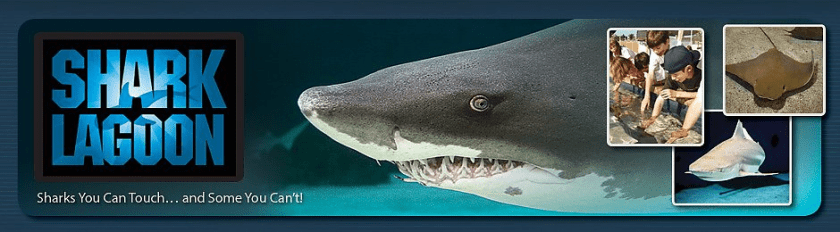
Witness Some of the Most Legendary and Enigmatic Animals: Sharks—The Ocean’s Ultimate Predators!
Shark Lagoon features more than 150 sharks, some of which you can touch … and some you can’t! This expansive outdoor exhibit is home to large sharks and rays, shark touch pools, interactive displays, an amphitheater, the Pacific Treasures gift store, and the Bamboo Bistro outdoor café.
Looking through a viewing window into the large shark exhibit, guests will be able to come nose-to-nose with sand tiger, zebra, and whitetip reef sharks. Daily presentations and feedings will showcase the power and beauty of these remarkable predators. Bamboo and epaulette sharks glide around the three shallow touch pools, where guests can reach in and touch these gentle and graceful animals.
Various interactive displays will highlight sharks’ senses, sizes, teeth, and reproduction, as well as their importance in the ocean’s food chain.
A giant water-squirting squid playground sculpture allows children of all ages to have fun while learning what it takes for an animal to avoid becoming a shark’s next meal. Each display reveals fascinating facts about sharks—some of the most intriguing animals, and perhaps the most misunderstood.
The 10,000-square-foot Shark Lagoon is the cornerstone of the Aquarium’s Explorers Cove, an outdoor educational adventure that also features the Aquarium’s Lorikeet Forest aviary. Together, Shark Lagoon and Lorikeet Forest represent the ultimate experience in animal interaction.
Plan Your Visit
Be Inspired and GetArtQuenched!
Be Sure and Follow Us on



 Be Inspired! ...and Get ArtQuenched!